Product Overview
Runshine New Materials (Foshan) Co., Ltd. manufactures high-performance amine functional curing agents under this series, specifically engineered for two-component epoxy coating systems. These modified polyether amines act as core crosslinking components that react with epoxy resins to form dense, highly durable, and chemical-resistant thermosetting network structures.This curing agent series offers tailored solutions for demanding industrial epoxy anti-corrosion and floor coatings, including protective linings for chemical tanks, infrastructure projects, marine environments, and heavy-duty industrial flooring. Key technical features include an exceptional balance of long pot life and fast drying/curing, even at low temperatures, alongside excellent resistance to chemicals, abrasion, water, and corrosion. These properties make it ideal for applications requiring robust long-term protection and efficient application properties.The product is engineered with a modified polyether backbone to provide superior flexibility, low viscosity, and improved substrate wetting, ensuring reliable performance and easy handling in high-build, solvent-based, and high-solids formulations.
Modified Polyether Amine Curing Agent for High-Performance Epoxy Coatings
--------------占位---------------
Key Features
✧ Extended pot life – The modified molecular structure provides a delayed reaction profile, allowing for longer working time and easier application of mixed material without compromising final cure.
✧ Excellent chemical and corrosion resistance – A high crosslink density and hydrophobic nature post-cure creates an impervious barrier against solvents, acids, alkalis, and salt spray, ensuring long-term substrate protection.
✧ Rapid dry-to-handle and through-cure – The amine technology facilitates a fast reaction with epoxy resins at ambient temperatures, enabling shorter downtime and faster return-to-service in industrial settings.
✧ Enhanced coating flexibility and impact resistance – The polyether backbone introduces flexible ether linkages (C-O-C) into the cured network, allowing the coating to absorb mechanical stress and deformation without cracking.
✧ Superior substrate adhesion – Strong affinity and wetting to various substrates, including prepared steel, concrete, and alloys, ensure a durable and long-lasting protective coating system.
✧ Good compatibility and easy blending – Designed for uniform miscibility with a wide range of epoxy resin types, facilitating homogenous film formation and consistent performance.
✧ Balanced mechanical properties – The curing agent promotes the development of a tough, abrasion-resistant film with an optimal balance of hardness and elasticity, ideal for demanding floor and corrosion environments.
✧ Effective performance at low temperatures – The active amine chemistry enables reliable curing and film formation even under challenging ambient conditions, extending the application season.
|
Parameter
|
Typical Value
|
Unit
|
Notes
|
|
Appearance
|
Has a yellow/muddy undertone
|
–
|
Visual inspection
|
|
Solid Content
|
100
|
%
|
Can be adjusted for formulation
|
|
Viscosity (25°C, Brookfield RV)
|
30-250CPS (25 ℃)
|
mPa·s
|
Spindle 3, 20 rpm
|
|
Color
|
≤3 # (Fe-Co)
|
/
|
/
|
|
Density (25°C)
|
1.05–1.15
|
g/cm³
|
Typical value
|
|
Recommended Solvents
|
–
|
–
|
For formulation compatibility
|
|
Shelf Life
|
12
|
months
|
Stored in sealed containers at 5–35°C
|
|
Storage
|
Cool, dry place
|
–
|
Avoid direct sunlight and moisture
|
| Product Name |
Application Mode |
Application Field |
Key Technical Features |
Product Type |
Solid Content (≥%) |
Viscosity mPa·s/25°C |
Acid Value mgKOH/g |
Color |
Other |
Solvent |
| HA9224 |
Modified Polyether Amine Curing Agent |
Epoxy anti-corrosion and floor coatings |
Long pot life; excellent resistance |
Polyurethane curing agent (general purpose) |
100 |
30 - 90 |
— |
≤3 |
Amine value 290 - 320 mgKOH/g, gel time at 23°C ≈130min |
— |
| HA9226 |
Modified Polyether Amine Curing Agent |
Epoxy anti-corrosion and floor coatings |
Fast drying; excellent resistance |
Polyurethane curing agent (multi - purpose) |
100 |
150 - 250 |
— |
≤3 |
Amine value 320 - 350 mgKOH/g, gel time at 23°C ≈25min |
— |
Applications
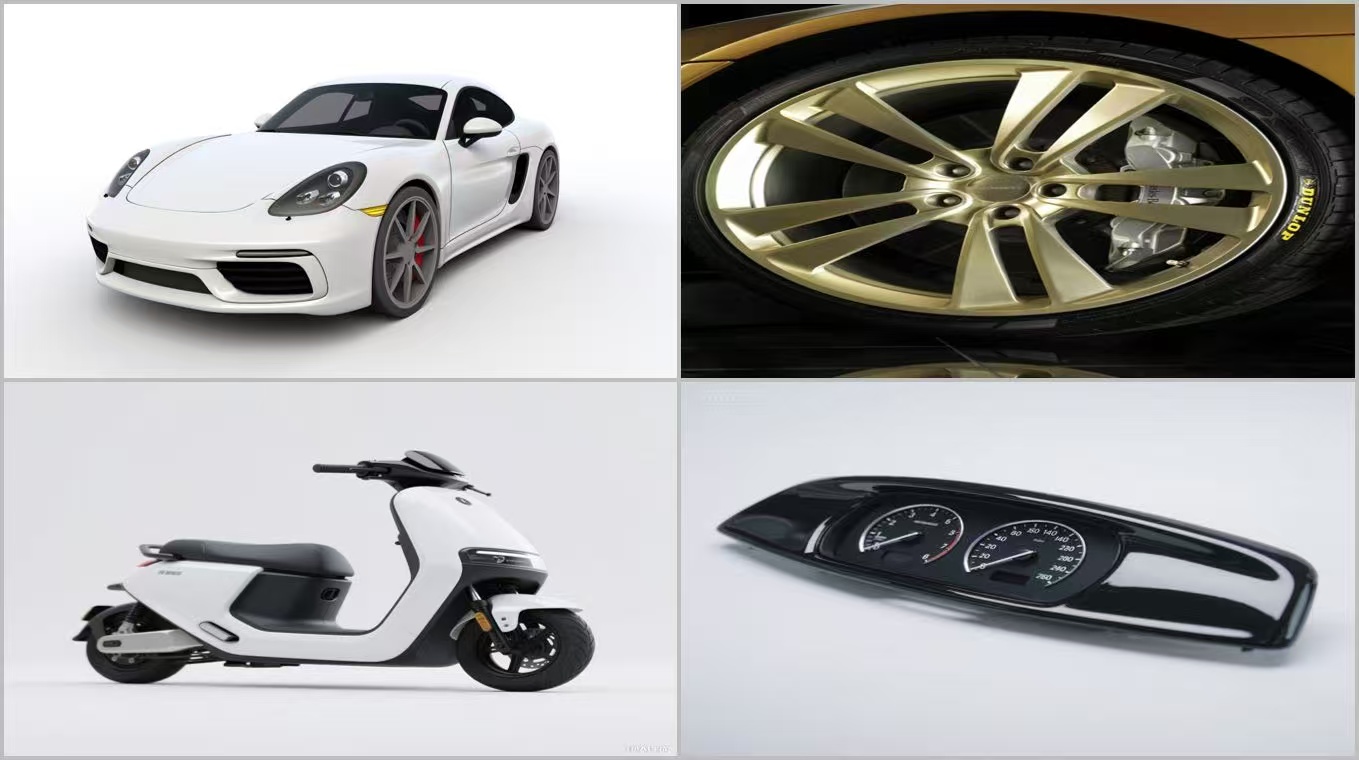
Our polyester resin is engineered for high-performance industrial baking coatings, delivering robust and durable finishes under elevated curing conditions.
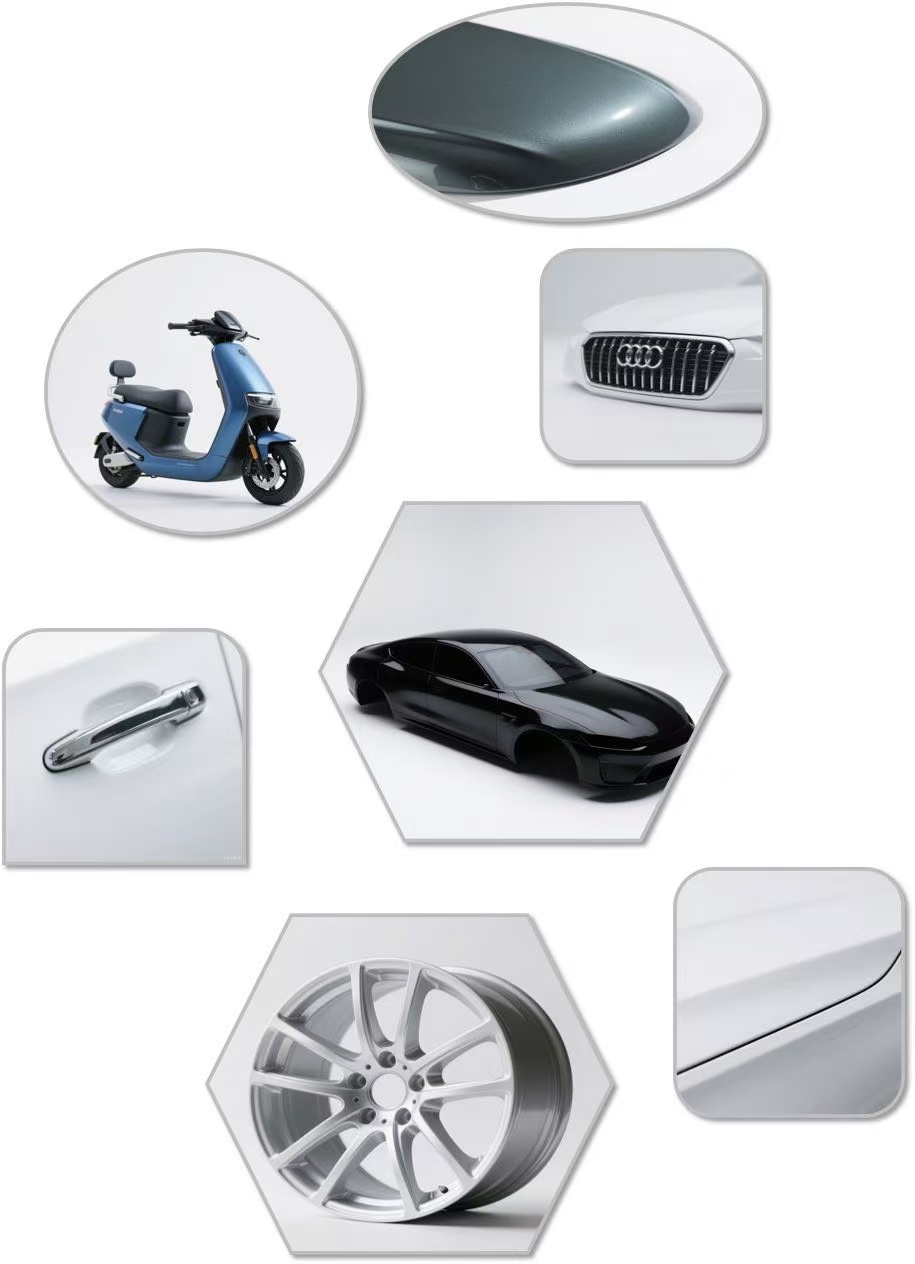
◊High-temperature baking primers and intermediate coats for automotive bodies and wheels
◊Heat-resistant baking enamels for metal substrates, including appliances and general industrial equipment
Benefits
1. High-Temperature Baking Polyester Resins
Key Traits: Hydroxyl- or carboxyl-functional; thermosetting via condensation or addition crosslinking at elevated temperatures (typically 120–180°C)
✧Primary Benefits:
Exhibits excellent flow and film formation upon baking, ensuring smooth and defect-free surfaces
Provides high crosslinking density, resulting in superior mechanical strength and chemical resistance
Offers good storage stability in one-component systems due to thermal latency
✧Typical Uses:
High-temperature baking primers and intermediate coats for automotive wheels and body components
Metal baking enamels for appliances and industrial equipment requiring durability and aesthetic quality
2. Two-Component Polyester Resins (for PU Crosslinking)
Key Traits: Hydroxyl-terminated; reacts with polyisocyanates at ambient or elevated temperatures
✧Primary Benefits:
Delivers excellent flexibility and toughness through urethane linkage formation
Ensures outstanding water resistance and inter-coat adhesion without compromising mechanical properties
Enables adjustable reactivity and pot life based on resin hydroxyl value and crosslinker selection
✧Typical Uses:
Direct-to-metal (DTM) coatings and topcoats for industrial machinery and structural components
Protective coatings for automotive parts and commercial vehicles requiring high abrasion resistance
3. Versatile Economy-Grade Polyester Resins
Key Traits: Balanced hydroxyl/acid value; compatible with multiple curing mechanisms (e.g., melamine, isocyanate)
✧Primary Benefits:
Provides strong adhesion to metallic and plastic substrates without additional primers
Offers excellent cost-performance and formulation flexibility across solventborne and high-solid systems
Maintains good mechanical properties and overall resistance in aggressive environments
✧Typical Uses:
Primers and single-layer coatings for general industrial and maintenance applications
Low-bake and force-dry coatings where rapid processing and reliable performance are critical