Product Overview
Waterborne acrylic emulsion are water-based film-forming systems specifically developed to boost the barrier properties of paper substrates. They are compatible with a broad spectrum of paper grades, from lightweight tissue to heavy-duty packaging board. These coatings integrate seamlessly with existing paper processing workflows, offering a flexible and efficient solution to upgrade paper performance without sacrificing its inherent traits. They address the industry’s need for paper products that can withstand external contaminants while adhering to sustainability standards.
Waterborne Acrylic Emulsion
--------------占位---------------
Key Features
◊ Sustainability and Environmental Compliance: Eliminating solvent use reduces environmental impact and operational hazards, supporting manufacturers in achieving carbon reduction targets. The coatings are also compatible with paper recycling processes, minimizing waste in the product lifecycle.
◊ Versatility Across End Uses: They cater to a wide range of applications, including food packaging, beverage cartons, industrial packaging, and functional paper like labels and medical packaging. Different formulations can be customized for specific barrier needs, from basic moisture resistance to high-performance oxygen barrier.
◊ Preservation of Paper’s Inherent Properties: The coatings do not alter paper’s lightweight, recyclable, or printable characteristics. They maintain paper’s flexibility, allowing for folding, shaping, and printing processes without compromising barrier performance.
◊ Cost-Effectiveness: Waterborne acrylic emulsion offer competitive pricing compared to specialty barrier materials like wax or plastic laminates. Their application processes are compatible with existing paper production lines, reducing capital investment in new equipment.
|
Parameter
|
Typical Value
|
Unit
|
Notes
|
|
Appearance
|
Colorless and transparent
|
–
|
Visual inspection
|
|
Solid Content
|
24-41
|
%
|
Can be adjusted for formulation
|
|
Viscosity (25°C, Brookfield RV)
|
200-500CPS (25 ℃)
|
mPa·s
|
Spindle 3, 20 rpm
|
|
Color
|
<1 # (Fe-Co)
|
/
|
/
|
|
Density (25°C)
|
1.05–1.15
|
g/cm³
|
Typical value
|
|
Recommended Solvents
|
Water
|
–
|
For formulation compatibility
|
|
Shelf Life
|
12
|
months
|
Stored in sealed containers at 5–35°C
|
|
Storage
|
Cool, dry place
|
–
|
Avoid direct sunlight and moisture
|
| Waterborne Acrylic Emulsion |
| Model |
Type |
Tg(℃) |
mfft(℃) |
Viscosity(mpa.s/25℃) |
Soild Content % |
pH Value |
Character |
|
| RHERI®A1303 |
Water-based acrylic colloid liquid |
|
<7 |
<500 |
40±1 |
7.0-8.0 |
A water-based acrylic semi-colloidal solution. Can be combined with 6037 to improve low-temperature heat sealing fastness. Also have good barrier effect when combined alone with carbodiimide. |
| RHERI®9020 |
Water-based acrylic colloid liquid |
29 |
10 |
<500 |
40±1 |
4.5-6.5 |
An aqueous colloid that requires alkali neutralization. The water resistance and resolubility can be adjusted with ammonia and amines with different boiling points. Also can be neutralized with NaOH to make water-washable coating. After high-temperature baking and decomposition, there is no residual carbonized black matter, so it can be used as colored connecting material for glass ceramics. Also can be used as resin for grinding color paste. |
| RHERI®9025 |
Water-based acrylic colloid liquid |
29 |
10 |
<200 |
24±1 |
8.0-9.5 |
A product of 9020 neutralized with ammonia. It has good compatibility with water-based polyurethane, can be used as economical matte oil when combined with water-based self-extinction PUD. |
| For more product list in detail ,pls feel free to contact us |
Applications
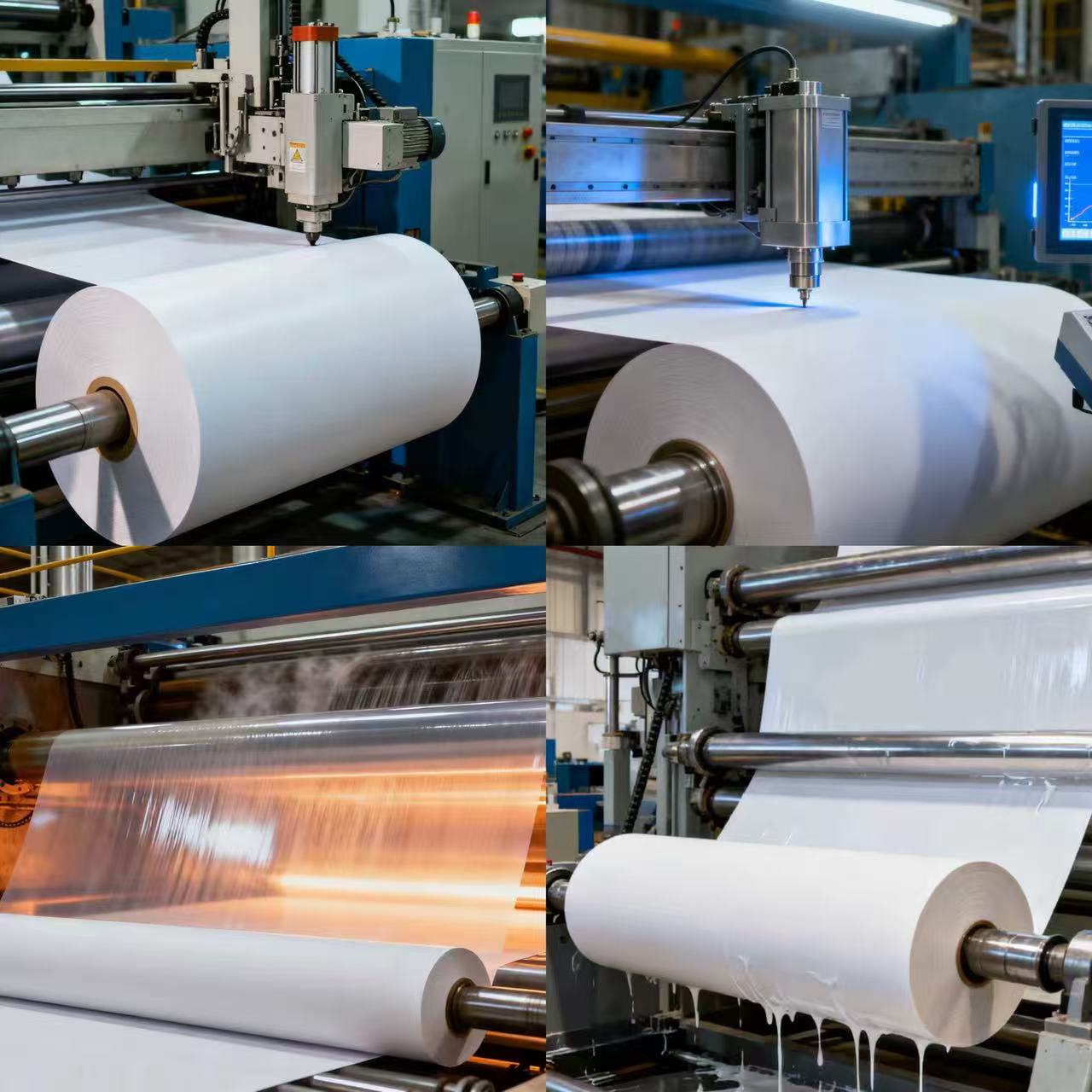
◊ Substrate Preparation: Paper substrates undergo surface cleaning to remove dust, fibers, and impurities that could affect coating adhesion. Surface treatment such as corona discharge may be applied to increase surface energy, promoting better wetting and film spreading.
◊ Coating Application Methods: Common techniques include roll coating, curtain coating, spray coating, and gravure coating. Roll coating is widely used for large-scale production due to its efficiency and uniformity, while curtain coating is preferred for high-precision barrier requirements. The coating weight is adjusted based on the desired barrier level, typically ranging from a few grams to tens of grams per square meter.
◊ Drying and Film Formation: After application, the coated paper is passed through a drying system where water evaporates, and the acrylic copolymers fuse to form a continuous barrier film. The drying process is controlled to avoid paper warping or coating cracking, with temperature and air flow optimized to balance speed and film quality.
◊ Post-Treatment (Optional): Some applications require post-treatment such as heat curing or UV crosslinking to enhance film density and crosslinking degree, further improving barrier durability and resistance to external stress.
Benefits
◊ Simplify production workflows by integrating seamlessly with existing paper processing equipment, reducing the need for costly upgrades or new machinery.
◊ Support sustainability goals and compliance with environmental regulations, reducing the risk of penalties and enhancing brand reputation among eco-conscious partners.
◊ Receive paper-based products with reliable barrier protection: extends the shelf life of packaged goods, prevents contamination from moisture/oils, and maintains product quality.
◊ Enjoy products aligned with personal sustainability values: the eco-friendly, low-VOC formulation of the coatings reduces environmental impact compared to solvent-based or plastic-coated alternatives.
◊ Benefit from versatile paper performance: coated paper retains flexibility and printability, ensuring products are easy to use and visually appealing.