Product Overview
The waterborne PUD features a distinct appearance of a bluish milky liquid, with a solid content of 40±1%, a pH value ranging from 7.0 to 9.0 at 25°C, and a viscosity of less than 800 mPa·s (measured by Brookfield at 25°C). When stored in intact original packaging, it maintains stability for 6 months at 20°C, with a recommended storage temperature range of 5°C to 30°C. It is important to note that freezing or exposure to temperatures exceeding 30°C may affect the viscosity and average particle size of the waterborne PUD, potentially leading to sedimentation or coagulation. Additionally, contamination by bacteria, fungi or algae can cause irreversible damage to the product, emphasizing the need for proper storage conditions.
Waterborne Polyurethane Dispersion
--------------占位---------------
Key Features
- Excellent flexibility and elastic performance, enabling it to adapt to various substrate shapes and withstand repeated bending or stretching without losing integrity.
- Good adhesion on multiple substrates, ensuring strong and durable bonding for coated products.
- Solvent-free formulation, aligning with environmental protection requirements and reducing harmful emissions.
- Stable physical and chemical properties under proper storage conditions, ensuring reliable performance.
| Parameter |
Typical Value |
Unit |
Notes |
| Viscosity (25°C, Brookfield RV) |
200 - 1000 |
mPa·s |
Spindle 3, 20 rpm |
| Soild Content |
30±1 |
% |
/ |
| pH Value |
7.0-9.0 |
– |
/ |
| Shelf Life |
6 |
months |
Stored in sealed containers at 5–35°C |
| Storage |
Cool, dry place |
– |
Avoid direct sunlight and moisture |
| Parameter |
Typical Value |
| Apprearance |
Milky white |
| Modulus(Mpa) |
4.5-6 |
| Elongation% |
≥450 |
| Tensile Srtrength(Mpa) |
≥35 |
Applications
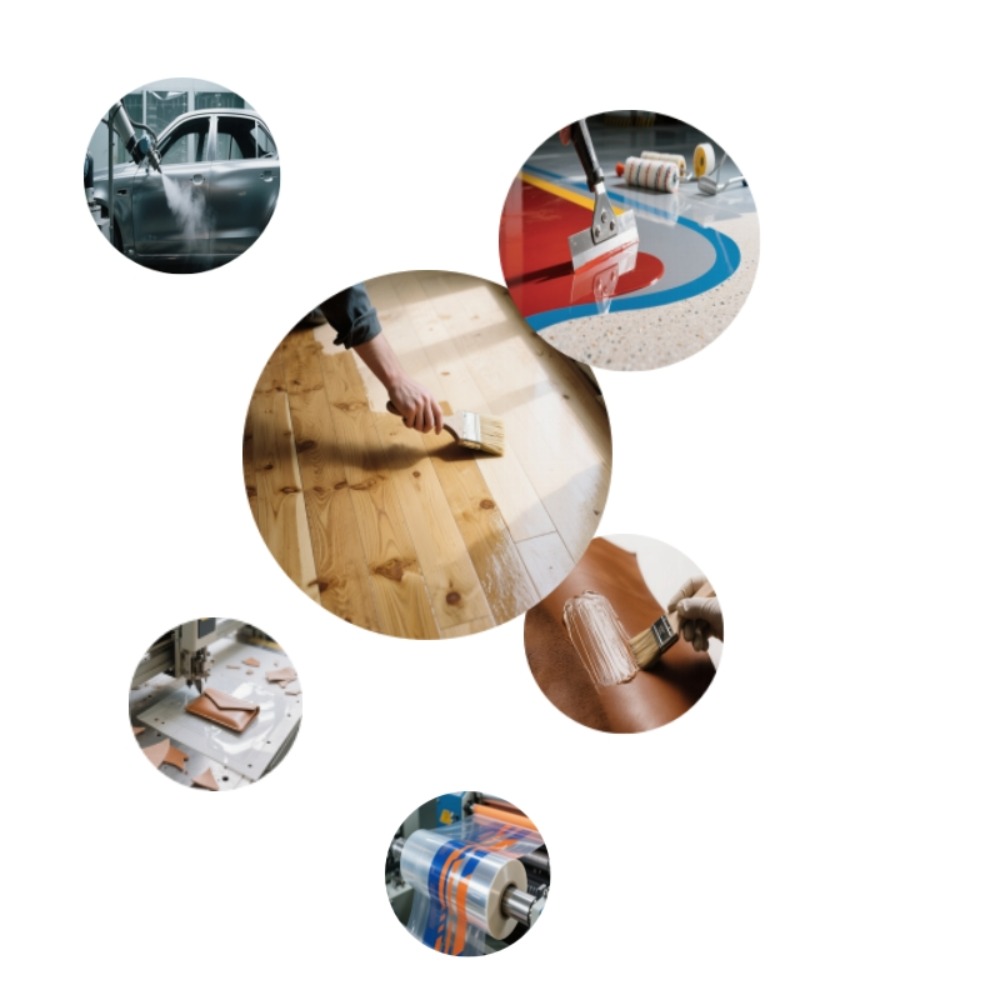
- Paper plastic-substitute field: Forms a protective and functional layer on paper surfaces, enhancing paper's durability, water resistance and mechanical strength. It allows paper products to replace traditional plastics in packaging, disposable tableware and decorative materials.
- Leather industry: Improves leather's flexibility, softness and wear resistance while maintaining strong adhesion, suitable for shoes, bags, furniture upholstery and other leather goods.
- Textile industry: Serves as a functional coating for fabrics, imparting water repellency, wrinkle resistance and durability without compromising breathability, ideal for outdoor clothing, upholstery fabrics and industrial textiles.

Benefits
- ◊ For manufacturers: Simplifies production processes and reduces costs by eliminating the need for additional adhesion promoters; complies with environmental regulations to meet green production standards and enhance brand image; stable storage performance ensures consistent product quality and avoids losses from deterioration.
- ◊ For end-users: Delivers better product performance, including more durable paper packaging, softer and wear-resistant leather goods, and functional textiles; products coated with this waterborne PUD have longer service life, reducing the frequency of replacement and lowering long-term usage costs.
- ◊ For the environment: Promotes plastic substitution to reduce plastic consumption and alleviate plastic pollution, contributing to sustainable development; solvent-free composition minimizes volatile organic compound (VOC) emissions, protecting air quality and ecological balance.
- ◊ Versatile compatibility: Adapts to multiple substrates and application scenarios, allowing manufacturers to streamline material inventory and expand product lines without switching core coating materials.
- ◊ Easy processing: Low viscosity ensures smooth application through spraying, rolling or brushing, improving production efficiency and reducing coating defects.